

Reforestation Initiative
Restoring acacia woodlands for biodiversity and livelihoods
Community-Led Acacia Restoration
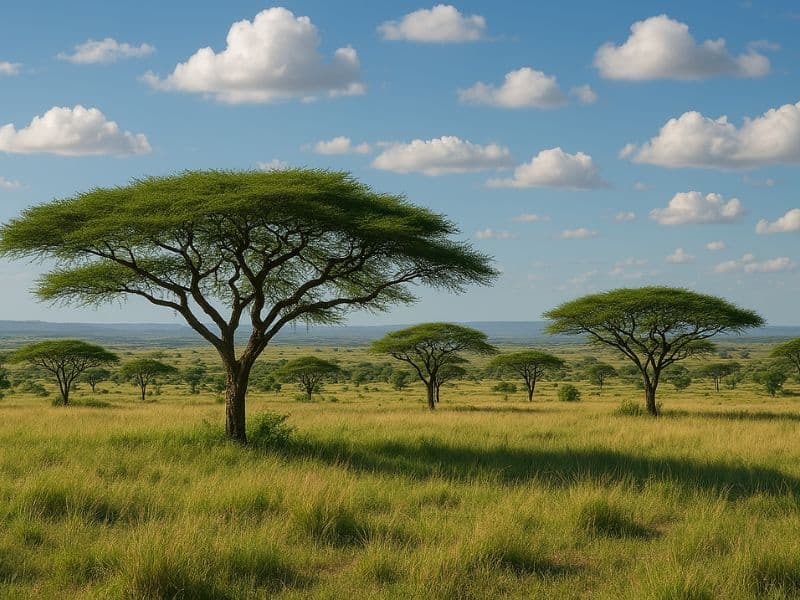
Since 2021, our community-led reforestation program has been working to restore the acacia woodlands of Kenya's ASALs, creating a sustainable foundation for both ecological health and economic prosperity.
Acacia trees are not only the source of valuable gum arabic but also play a crucial role in preventing desertification, sequestering carbon, and supporting biodiversity in these fragile ecosystems. Our initiative combines traditional knowledge with modern conservation techniques to regenerate over 1,200 hectares of degraded acacia woodlands.
1,200+
Hectares restored
120,000+
Trees planted
35%
Biodiversity increase
Our Approach
We take a holistic, community-centered approach to reforestation that ensures long-term sustainability and maximizes environmental and economic benefits.
Community Tree Nurseries
We've established 15 community-run acacia tree nurseries that produce over 50,000 seedlings annually, creating local employment while ensuring a steady supply of native seedlings.
Indigenous Knowledge Integration
We blend traditional ecological knowledge with scientific approaches, working with elders and community leaders to map restoration sites and identify optimal planting methods.
Innovative Planting Techniques
We use water-efficient techniques such as micro-catchment systems and hydrogels to increase seedling survival rates by 80% in arid conditions.
Long-term Monitoring & Protection
Community conservation teams monitor restored areas and protect young trees, ensuring high survival rates while creating employment opportunities.
Environmental Impact
Our reforestation efforts deliver multiple ecological benefits
Biodiversity Conservation
Restored acacia woodlands have seen a 35% increase in plant and animal diversity, including the return of native bird species and small mammals that play crucial roles in the ecosystem.
Carbon Sequestration
Our reforestation efforts sequester approximately 8,000 tons of CO₂ annually, contributing to climate change mitigation while creating the potential for carbon credit revenues for local communities.
Soil & Water Conservation
Regenerated acacia woodlands have reduced soil erosion by 60% and improved water infiltration, helping to replenish groundwater sources and reduce the impact of periodic droughts.
"Twenty years ago, this area was green with acacia trees. Then we saw desertification take hold as trees were cut down. Through this reforestation program, we're not just restoring our environment but reclaiming our heritage. These trees are our future, providing gum arabic for income and healing our land."
Joseph Lekuton
Community Elder, Marsabit County
Measurable Impact
Our reforestation initiative has created quantifiable environmental and economic benefits
60%
Reduction in soil erosion
40%
Increase in local rainfall
120
Green jobs created
25%
Future harvest potential
Related Initiatives
Explore our other impact stories


Support Our Reforestation Efforts
Join us in restoring Kenya's critical acacia woodlands. Through partnerships, investment, or carbon offset programs, you can help us expand our impact.
Get Involved